
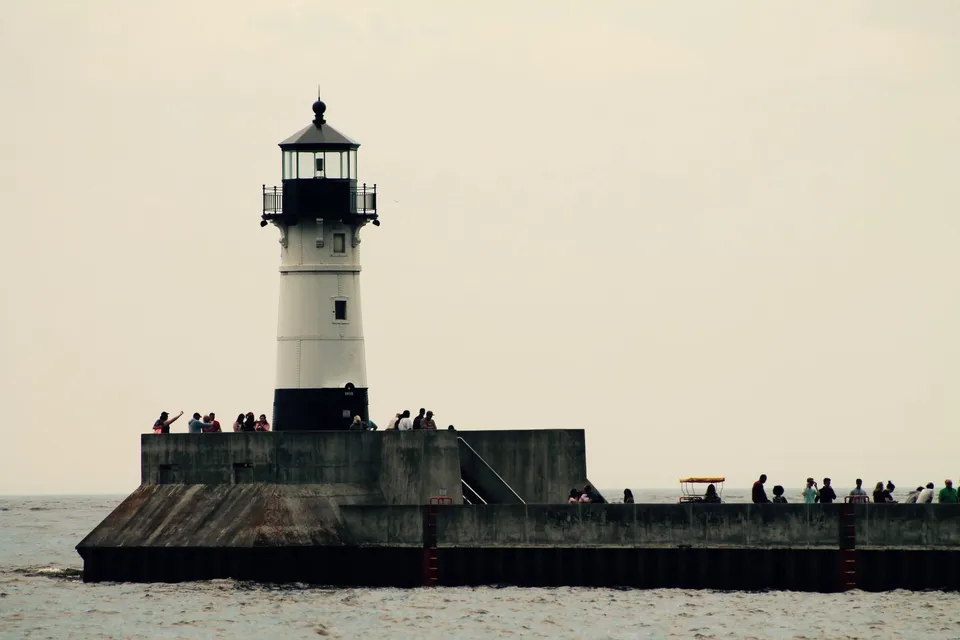
Duluth is not a place where work sits in one corner and the rest of life floats around it. The Seaway Port Authority describes a working waterfront with twenty privately owned bulk cargo docks, a general cargo terminal, a shipyard with dry docks, tug and barge services, and intermodal connections by road, rail, and water, which means some jobs here are tied to freight movement as much as to a building address. At the same time, the Duluth Transit Authority lets riders choose route, day, and direction to view schedules, and the city maintains over 30 miles of paved and gravel trails that include the Lakewalk, Cross-City Trail, and Waabizheshikana: The Marten Trail. For someone deciding whether to move for work, those three systems—freight, transit, and trail access—shape the week before it even starts. (duluthport.com)
The worksite changes the first question
A Duluth offer is easier to read when you know what kind of place you will be reporting to. A harbor-facing role, a warehouse shift, a shop floor, a health-care schedule, and an office desk all ask something different of your commute. That is not a dramatic claim; it is a practical one. If the work is part of the port system, the Port Authority’s road-rail-sea connectivity matters because those jobs depend on freight timing and access corridors, not just on where rent is cheapest. If the job is farther from the waterfront, the real issue may be whether your route to work is stable enough to support one car, no car, or a household that shares a vehicle. (duluthport.com)
That is why a Duluth-area move can feel more manageable when you think in terms of trip patterns rather than just mileage. The same address can work well for one person whose shift starts after sunrise and poorly for another who needs to cross town before the streets are busy. Inference matters here: the city’s infrastructure does not choose your job for you, but it does shape which job offers feel realistic once the commute, the parking, and the backup plan are all part of the same day. (duluthport.com)
Transit is worth checking before you fall in love with an address
The DTA’s schedule page is useful because it does not treat the network as a single line; you can filter by route, date, and direction, which is exactly the level of detail a newcomer needs when a shift changes between days or weeks. DTA also publishes an emergency weather schedule, a reminder that a winter plan should include a backup even if the regular trip looks simple on a sunny afternoon. For people comparing homes in Duluth, Hermantown, Proctor, Rice Lake, or across the line in Superior, that means the important question is not whether transit exists in the abstract, but whether the specific work-trip pattern you actually live with can be repeated on Monday, Thursday, and during a weather disruption. (duluthtransit.com)
Cross-border travel matters here too. DTA’s Superior route information says Route 110 is a critical connection for Duluth and Superior residents, and it notes that Routes 111 and 211 remain in place. That is a concrete reminder that the Twin Ports are not a generic metro spread across a map; they are a pair of connected communities with their own daily movements. If a job or household crosses the harbor, the value is not just in having service somewhere nearby. It is in whether that service matches the hours and direction you actually need. (duluthtransit.com)
Superior is part of the real commute map
Because the DTA’s tools explicitly cover Duluth and Superior, a local move can involve a Minnesota address and a Wisconsin work trip, or the reverse, without the arrangement feeling unusual at all. The practical takeaway is simple: the state line is less important than the repeatability of the trip. If you are comparing housing around Duluth, Superior, Hermantown, Proctor, or Rice Lake, look first at whether the commute works on paper, then ask whether it still works when a shift starts early, ends late, or changes with the season. That is the kind of question a job seeker can answer before signing a lease, and it often matters more than a broad assumption about “short” or “long” drives. (duluthtransit.com)
Training can travel with the move
If the job you take is a stepping-stone rather than a final destination, Lake Superior College is part of the local picture. The college says its continuing education division offers flexible, on-demand training designed to meet the evolving needs of individuals and businesses, and its customized training arm is built for employers as well as workers. The useful part for a newcomer is not a promise of instant advancement; it is the chance to line up classes with an actual workweek. Before counting on any specific course, though, verify the format, prerequisites, location, dates, and cost so you do not build a plan around a class that does not match your schedule. (lsc.edu)
That matters in a city where a move for work can be paired with a move toward a better credential. A flexible class may help a worker who is testing a new field, and a customized program may help an employer think more seriously about internal development. The point is not to overstate what any one course can do. It is to recognize that a Duluth relocation becomes more durable when work and learning can share the same calendar instead of competing for it. (lsc.edu)
The place you unwind should be part of the move
Duluth’s trail system is large enough to matter in everyday life. The city says it has over 30 miles of paved and gravel trails, and its trail listings include the Lakewalk, Cross-City Trail, and Waabizheshikana. The Lakewalk itself stretches nearly eight miles from Canal Park to Brighton Beach along much of Lake Superior’s shore. That matters because a job search is rarely only about the commute to work; it is also about whether you can build a routine that resets you after a shift, a class, or a long day of looking for housing. If a trail or two becomes your regular evening loop, a move feels less like an adjustment project and more like a livable rhythm. (duluthmn.gov)
Because the city also points users to an online parks and trails map, it is worth checking which corridor sits closest to your neighborhood rather than assuming every route feels the same in every season. The official trail pages are a reminder that even in a city known for work on the water and movement through the harbor, the everyday question can still be simple: where do you go when the shift ends and you want your head to clear? (duluthmn.gov)
A simple way to judge a Duluth offer
Before you say yes, ask four practical questions:
- Does the worksite sit closer to freight corridors, downtown streets, or a bus route you can actually repeat?
- Can you view the exact route, day, and direction before you sign a lease?
- Is your training plan fixed, flexible, or online/on-demand?
- Where will you go when the day is over and you need one reliable mile to clear your head?
Those questions sound small, but they keep the same mistake from repeating: choosing an address before you know how the week will run. In a city where port traffic, transit schedules, and trail access all pull on the day, the best neighborhood is often the one that makes your most common trip the easiest one. (duluthport.com)
If you are still comparing options, start with community resources and then verify today’s transit details before you settle on an address. That keeps the choice practical, local, and tied to the week you will actually live.