
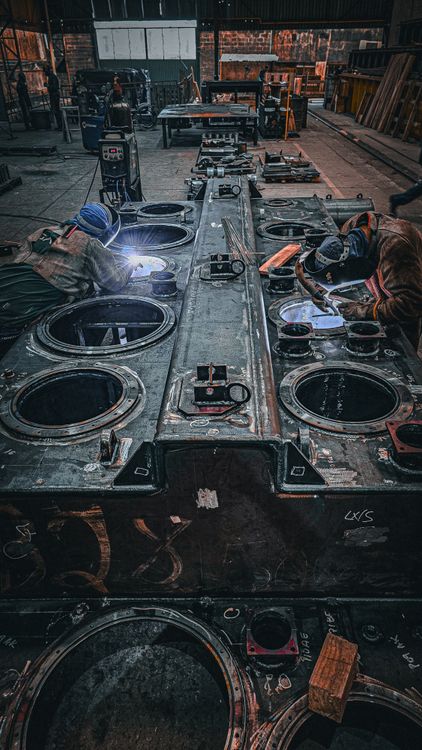
Duluth’s identity has been tied to industry and transportation for generations. The city grew as a Great Lakes port connected to railroads, timber, grain and Minnesota iron ore, and the Duluth-Superior harbor remains an important freight gateway. Today, the local economy is more diversified, but hands-on technical work continues to matter in Duluth and across Northeast Minnesota.
Career paths in industry and the trades
For job seekers, that creates several overlapping career paths. Skilled-trade and industrial employers may need mechanics, HVAC technicians, welders and fabricators, machine operators, inspectors, equipment operators, drivers, warehouse workers, material handlers and production employees. Some jobs require formal licenses or substantial experience; others provide an entry point for people who can demonstrate mechanical ability, safety awareness and a strong work record.
Minnesota DEED’s June 2026 Northeast Minnesota workforce analysis is useful context. While the overall regional labor market had cooled, DEED identified manufacturing as an area of relative stability or expansion and noted regional wage advantages in production and installation, maintenance and repair occupations. Those categories are especially relevant to workers who want a career based on technical skill rather than a four-year degree.
Twin Ports connections and the wider region
Duluth also benefits from its location. The Twin Ports connect highway, rail, maritime and regional supply chains. A worker living in Duluth may find opportunities within the city, in Hermantown or Superior, or farther north and west with employers tied to mining, construction, equipment service and manufacturing. The Brainerd/Grand Rapids Express job board regularly reflects that wider geography. August 2026 listings included a Chain Test Inspector in Duluth, mechanics in Hibbing, Virginia and Grand Rapids, a Press Brake Operator in Hibbing, a CDL Class A Tanker Driver in Virginia, an HVAC Technician in Grand Rapids, and industrial openings in Bemidji and other communities.
Make your qualifications clear
The best way to compete for this work is to make technical qualifications easy to see. If you have a CDL, list the class and endorsements. If you can operate a forklift, press brake, CNC equipment, welding process or specialized testing equipment, state that clearly. Mechanics should identify the equipment or vehicle types they have serviced and the diagnostic systems they know. HVAC workers should list certifications and the systems they have installed or maintained. Safety training, clean driving history where relevant, and reliable attendance can be just as important as years of experience.
Compare the full offer
Applicants should also evaluate the full compensation picture. Hourly pay is important, but so are overtime opportunities, shift differentials, travel expectations, seasonal schedules, tools, benefits and the distance to the job site. Northern Minnesota employers may offer strong wages for hard-to-find technical skills, but some roles require commuting or working outside the Duluth city limits.
For people who enjoy solving physical problems and seeing the result of their work, Duluth and the surrounding region can offer a practical path to a long-term skilled career.
Search current Express openings →