
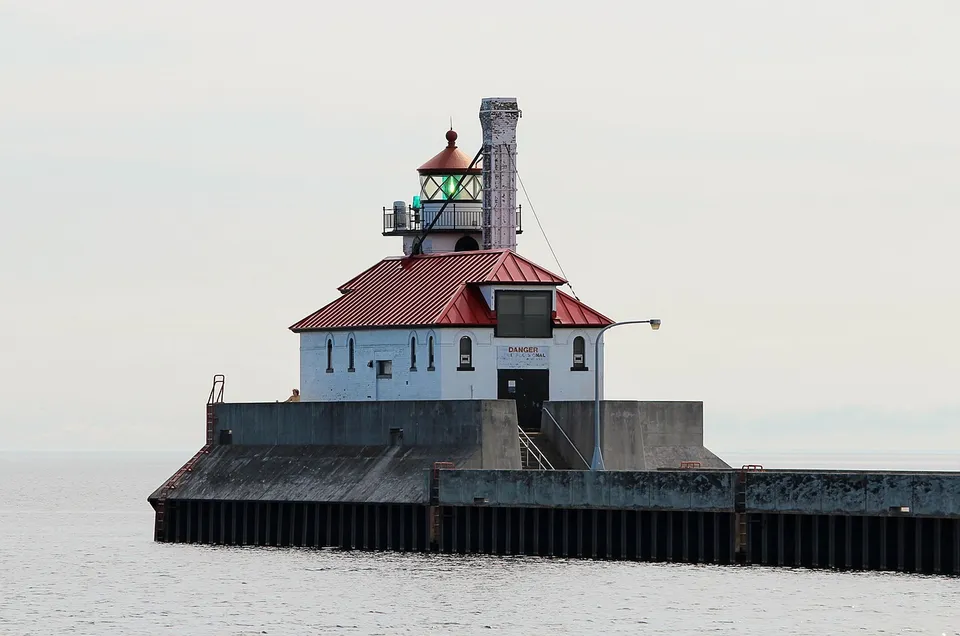
In Duluth, a job is often more than a building with a parking lot. The Duluth Seaway Port Authority describes a local system that includes bulk docks, a general cargo terminal, a shipyard, tug and barge services, and connections among water, rail, and highways. That matters because the workday here can be shaped by more than a clock-in time: it can also be shaped by freight flow, route timing, and whether your next step is a shift, a class, or a ride home.
That is a useful lens for applicants, newcomers, and employers alike. A great title on paper can still be awkward in practice if it sits inside the wrong daily pattern.
1) Some local jobs live inside a logistics chain, not a single site
In the Twin Ports, not every position is isolated from the movement around it. A role connected to docks, maintenance, driving, inventory, dispatch, or support may be part of a wider system that includes ships, railcars, trucks, and industrial schedules. That does not make the work mysterious; it just means the right questions are different.
Instead of asking only, “What does the job pay?” it can help to ask:
- What does a normal day look like when freight is active?
- Does the pace change when water, rail, or highway schedules change?
- Is this a steady office rhythm, or does the role follow a moving network?
For someone relocating to Duluth, Hermantown, Proctor, Rice Lake, or Superior, that distinction can shape everything from childcare handoffs to when errands fit. A worksite that sounds central on a map may still function like a node in a much larger transportation system.
2) Transit here is useful only when it matches your actual shift
DTA publishes Duluth and Superior routes and schedules and lets riders choose route, day, and direction to view service. It also links service alerts and an emergency weather schedule. That is a practical local detail, not just a transit brochure feature.
For job seekers, it means the real question is not simply, “Is there bus service?” The better question is, “Does the route line up with my exact start time, end time, and day pattern?” If you are comparing a Duluth address with a Superior address, keep those locations distinct and check the schedule for the specific trip you would actually make.
This is especially important for shift work, split shifts, and jobs with changing start times. A schedule that looks convenient at noon may not help much at 6 a.m. or after dark.
3) Training can belong in the same week as work, not a separate season of life
For people building skills while they work, Lake Superior College offers continuing education, customized training for businesses, and online on-demand learning. That does not guarantee a credential, a promotion, or a specific outcome. It does, however, show that local skill-building can be organized around real life instead of postponed indefinitely.
That matters in a region where a first job may lead to a second, better one, or where an employer may want someone who can grow into a new task. If you are moving here for work, training can be part of the same weekly routine as commuting and paying bills. If you are hiring, that can also affect how a role is designed and how quickly someone can settle in.
4) The end of the day is part of the move too
A workable job in Duluth is not only about the hours you sell; it is also about where you reset afterward. The city’s paved and gravel trail directory includes the Lakewalk, Cross-City Trail, and Waabizheshikana: The Marten Trail, with an online parks and trails map. Those trails are useful not because every route behaves the same way, but because they give newcomers concrete places to explore when they are learning the city.
That kind of after-work routine matters. A person who can step out for a walk, bike ride, or quiet hour in a familiar place often gets a better read on whether a move feels sustainable.
What to test before you say yes
If you are considering a Duluth-area offer, try this simple sequence:
- Identify the network behind the job.
- Check whether the commute matches the exact schedule.
- See whether training fits the same week.
- Find one place to recharge that you can actually return to.
That is a more honest test than asking whether Duluth is “a good place to live” in the abstract. It is also more useful.
If you are comparing a move or commute, start with community resources and then browse current jobs when you are ready to match work to the rest of your week.