
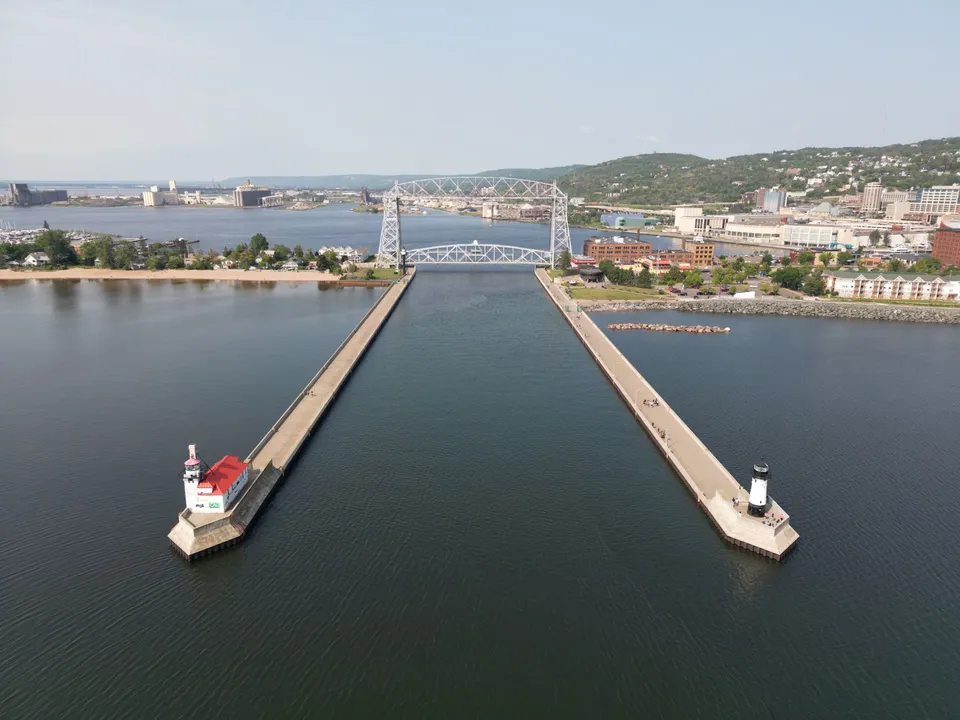
A Duluth-area job is often more than a paycheck plus a commute. In the Port of Duluth-Superior, the working waterfront includes bulk cargo docks, a general cargo terminal, a shipyard, tug and barge services, and direct connections by water, road, and rail. That is a very different daily rhythm from a role that lives mostly inside one building. At the same time, the Duluth Transit Authority asks riders to choose route, day, and direction to see schedules, and its route list reaches both Duluth and Superior as well as nearby communities such as Proctor. For someone comparing homes in Duluth, Hermantown, Proctor, Rice Lake, or Superior, the real question is often not just where the job is, but what kind of local system the job depends on. (duluthport.com)
Start with the harbor if the work touches freight
The harbor is one of the clearest examples of why local context matters. The port authority describes the Clure Public Marine Terminal as the harbor’s only breakbulk and general cargo maritime freight facility, with on-dock rail and access to four Class I carriers. It also says cargo moves through the terminal by water, road, or rail. That tells you something practical about the kind of employment ecosystem around the port: some roles are shaped by vessel timing, cargo flow, and intermodal handoffs, not by a simple 8-to-5 routine. If you are looking at logistics, materials handling, marine support, or related work, that multimodal structure is part of the job itself. (duluthport.com)
The same detail can help newcomers judge whether a role fits their life outside the warehouse, terminal, or office. A job that leans on harbor operations may feel better if you like work that follows systems and schedules, and less good if you need a predictable neighborhood-only routine. That is not a warning; it is a useful filter. In Duluth, the job’s footprint can extend across roads, rails, and the waterfront in a way that would not matter in a smaller single-industry town. (duluthport.com)
Do not assume the bus map works the same for every shift
Transit is another local system that can quietly shape whether a job is workable. DTA’s schedules are organized by route, day, and direction, and the agency also posts service alerts and an emergency weather schedule. Its current route list includes Duluth routes such as 103 New Duluth - DTC - Lakeside - UMD, 109 Proctor Spirity Valley - DTC, 110 DTC - Superior - Tower Ave, 111 Superior Circulator, 210 Central Superior - Tower Avenue - South Superior, and 211 Superior - Billings Park - East End. If a shift starts early, ends late, or crosses the Minnesota-Wisconsin line, those details matter more than a vague promise that the city has bus service. (duluthtransit.com)
That is why applicants should think in terms of exact trips, not just general geography. A job in Superior may be perfectly reasonable for a Duluth resident, but the value of that opportunity depends on the route, day, and direction you actually need. The same is true in the other direction. For employers, this also means a role can look easier to fill if the schedule fits the local transit pattern instead of fighting it. (duluthtransit.com)
Training can be part of the same move
One reason the Duluth area can work well for career changers is that training does not always sit far away from employment. Lake Superior College’s continuing education division offers individual training, customized group training for businesses, and on-demand options for people who cannot make it to an in-person event. Its on-demand catalog includes items such as CPR, CDL theory, CDL hazmat, passenger endorsement, and school bus endorsement. That makes the local market more flexible than a simple search for open positions might suggest, because some workers can pair a move or a new job with skill-building in the same region. (lsc.edu)
For a newcomer, that can matter as much as wages or title. If you are relocating for work, a city with training options lets you think about the next step before you have even unpacked the last box. If you are an employer, it can mean a stronger candidate pool if the job connects naturally to nearby learning paths. Either way, the point is the same: in Duluth, employment and development can be part of one local system rather than two separate errands. (lsc.edu)
After-shift life is part of the job fit too
Duluth’s trail network is not just a weekend perk. The city says it offers more than 30 miles of paved and gravel trails, including the Lakewalk, Cross-City Trail, and Waabizheshikana: The Marten Trail. The Lakewalk runs nearly eight miles from Canal Park to Brighton Beach, and the Cross-City Trail is being built as a 10.3-mile multi-purpose connection that will link downtown, western Duluth, and other major trail routes. The city also notes that the trail system includes many miles of trail for walking, biking, hiking, and other uses. For someone deciding where to live while working in Duluth, Superior, Hermantown, Proctor, or Rice Lake, that is not just lifestyle decoration; it changes how easy it is to reset after work without turning every small errand into a car trip. (duluthmn.gov)
The best local offers are often the ones that fit the whole day, not just the shift. Ask whether the role depends on harbor operations, a specific bus pattern, nearby training, or a trail-friendly routine. If those pieces line up, a Duluth job can feel more sustainable from the start.
If you are comparing local options now, start with the current openings on duluthmnjobs.com’s jobs page and check whether the role matches your route, training, and after-work routine.