
When people compare jobs in Duluth, they often start with pay or title. That is understandable, but it misses the part of the decision that actually shapes daily life: which schedule your job creates, and whether the rest of your week can keep up.
Duluth is unusually good at revealing that difference. A harbor role, a class schedule, a bus route, and an evening trail walk can all sit inside the same workday—but only if they line up. The Port of Duluth-Superior is not a single employer type but a working system with bulk docks, a general cargo terminal, a shipyard, tug-and-barge services, and connections among water, rail, and highways. That means “port work” can mean cargo handling, maintenance, dispatch, warehousing, rigging, or logistics coordination, not just one kind of dock labor.
The harbor has its own clock
One reason the Twin Ports are so distinctive is that harbor work does not run on a simple nine-to-five rhythm. The port authority says the Great Lakes navigation season runs from March 25 to January 15, and the oceangoing season from March 25 to December 25, with seasonal adjustments as needed. That means some work here is tied to vessel windows, weather, dredging, and freight timing rather than to a fixed office calendar.
For a job seeker, that matters because a local offer is not just a job description. It is an operating schedule. If your background includes forklift work, CDL experience, warehouse receiving, equipment maintenance, or freight documentation, the harbor’s operations and facilities page helps show why the region’s logistics jobs often sit between trucking, rail, and marine support instead of inside one silo.
Transit and training live in the middle of the week
The next question is whether you can keep moving once the shift ends. Duluth Transit Authority does not offer a generic “citywide commute.” It lets riders choose route, day, and direction to view schedules, and it publishes service alerts and an emergency weather schedule. Its route network reaches downtown Duluth, the harbor area, the airport side, Proctor, Superior, and the campus district. That makes transit part of the work search itself, not an afterthought.
That is especially important if you are trying to work while studying. Lake Superior College’s continuing education and customized training page shows that local learning can happen in more than one format, including online on-demand options. The safe takeaway is not that every program fits every worker, but that the region has a training pathway worth checking before you commit to a schedule that leaves no room for class. For details on format, prerequisites, dates, and cost, the official Lake Superior College continuing education page is the right place to verify what is current.
Housing changes the meaning of “close”
A Duluth job search also looks different once you compare housing markets across the harbor. Duluth’s Census QuickFacts page reports a median gross rent of $1,087 and median monthly owner costs of $1,573 with a mortgage in the 2020–2024 period. Superior’s comparable page shows a median gross rent of $900, while Carlton County’s shows $1,009. Those are not predictions for any single household, but they are enough to show that the same job offer can feel very different depending on where you plan to live.
That is why “Duluth area” should never be treated as one housing market. A place that looks reasonable on paper may still create a long or awkward commute once you add a shift start time, bridge crossings, or a bus transfer. A lower rent in Superior or a county-edge home in Carlton County may improve one part of the budget while changing your travel pattern in a way you would not notice from a headline rent figure alone.
The best reset is local, not generic
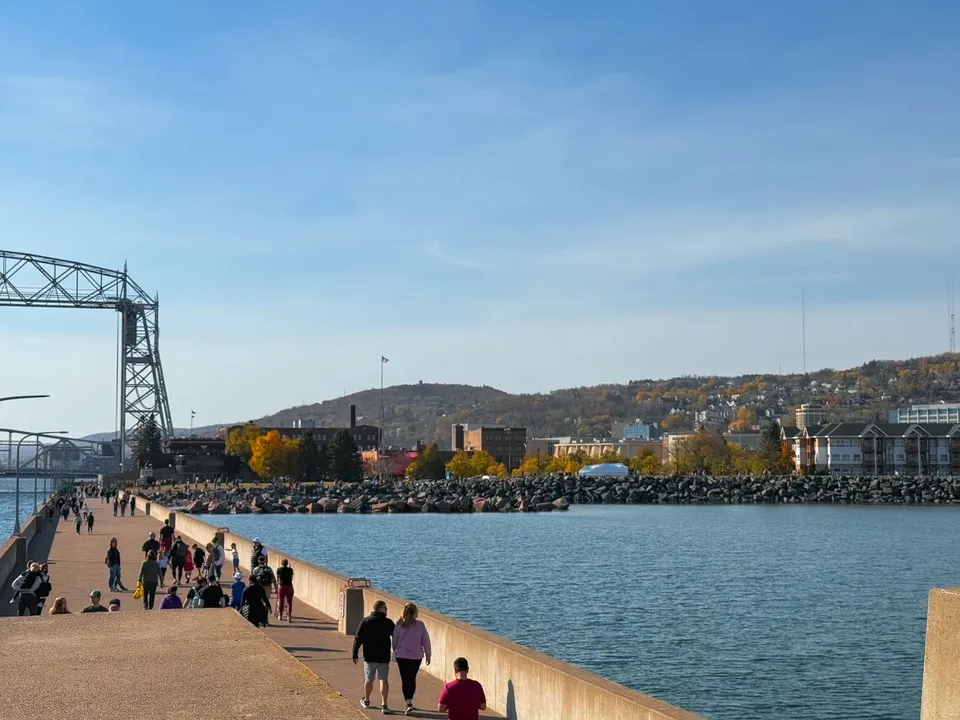
A relocation decision gets easier when you know what your off-hours will actually look like. Duluth’s paved and gravel trail directory includes the Lakewalk, Cross-City Trail, and Waabizheshikana: The Marten Trail. Those trails do not solve childcare, rent, or transit, but they do tell you something practical: there are real places nearby where a resident can decompress without needing to leave the city. The city’s own trail map also reminds you that surfaces, access, and winter maintenance are not identical from one path to another.
That matters more than a postcard view. If you are working a shift-heavy schedule, the question is not whether Duluth has recreation. It does. The question is whether your job, your commute, and your off-time all leave room for you to use it.
A better way to judge a Duluth opportunity
Before you accept a job or decide whether to relocate, try three checks:
- Does the work schedule match the way the harbor, plant, office, or service operation actually runs?
- Does your route, shift, or class timing fit a real DTA schedule, not just a map outline?
- Does your home base leave enough time for rest, training, and ordinary life?
Those questions sound simple, but they are the difference between a move that feels strained and one that feels workable. Duluth is a place where work, learning, and daily routines are closely linked. The harbor, the transit network, the college system, and the trail network all shape that experience in ways a salary number cannot capture.
If you are planning a move or comparing offers, take one more step and review the local community resources page while you compare neighborhoods, routes, and training options.