
Why the fit matters before the first day
In Duluth, a job offer is rarely just a paycheck and a start date. It sits inside a real geography: freight and water traffic, bus schedules, class times, and the places where you recover after work. The Duluth Seaway Port Authority describes a working system of bulk docks, a general cargo terminal, a shipyard, tug and barge services, and connections among water, rail, and highways. That mix hints at why some local jobs feel very different from one another, even when the titles sound similar. Add in the Duluth Transit Authority’s route, day, and direction tools, and you get a city where the details of the day can matter as much as the role itself.
Start with where the work lives
If you are comparing opportunities in Duluth, Hermantown, Proctor, Rice Lake, or across the bridge in Superior, ask where the work actually happens. A role connected to port operations, logistics, or industrial support may come with a different rhythm than a storefront, office, or campus job. The point is not to guess at the schedule, but to notice that the worksite’s setting can shape everything from arrival time to parking, from weather exposure to how you get home.
That matters for newcomers most of all. A person relocating for work may know the wage and the title long before they know whether they will be driving, riding, or combining both. In a place with active water, rail, and highway links, the same job category can sit closer to one transportation pattern than another. So the better question is not simply “What is the job?” but “What kind of day does this job create?”
Check transit before you call a commute easy
The DTA’s route pages let riders select the route, day, and direction to view schedules, and they also connect to service alerts and an emergency weather schedule. That sounds like a small detail, but it is one of the most useful local checks a job seeker can make. A home that seems close on a map may not be as simple in practice. A worksite that looks reachable on weekdays may be a different story on a late shift, a weekend shift, or a day with severe weather changes.
That is especially important if you are weighing Duluth against Superior or trying to live in one neighborhood while working in another. The right bus line can make a job feel possible. The wrong one can turn a good opportunity into a stressful daily puzzle. Before you decide a role fits, verify the current route and timing for the days you would actually work.
Build your next step into the same plan
One of Duluth’s quieter advantages is that workers do not have to treat training as something that happens later, after life calms down. Lake Superior College offers continuing education, customized training for businesses, and online on-demand learning. That does not guarantee a credential or a promotion, and the specifics still need to be checked carefully. But it does give job seekers and employees a practical way to keep building skills while staying in the labor market.
That flexibility matters if you are trying to move toward healthcare support, office work, trades, or another field that rewards current skills. For some people, the best local job is the one that leaves room for one class, one certificate, or one skill update at a time. In a city where work and training can overlap, “starting over” does not have to mean stepping away from income entirely.
Don’t ignore the part of the day after work
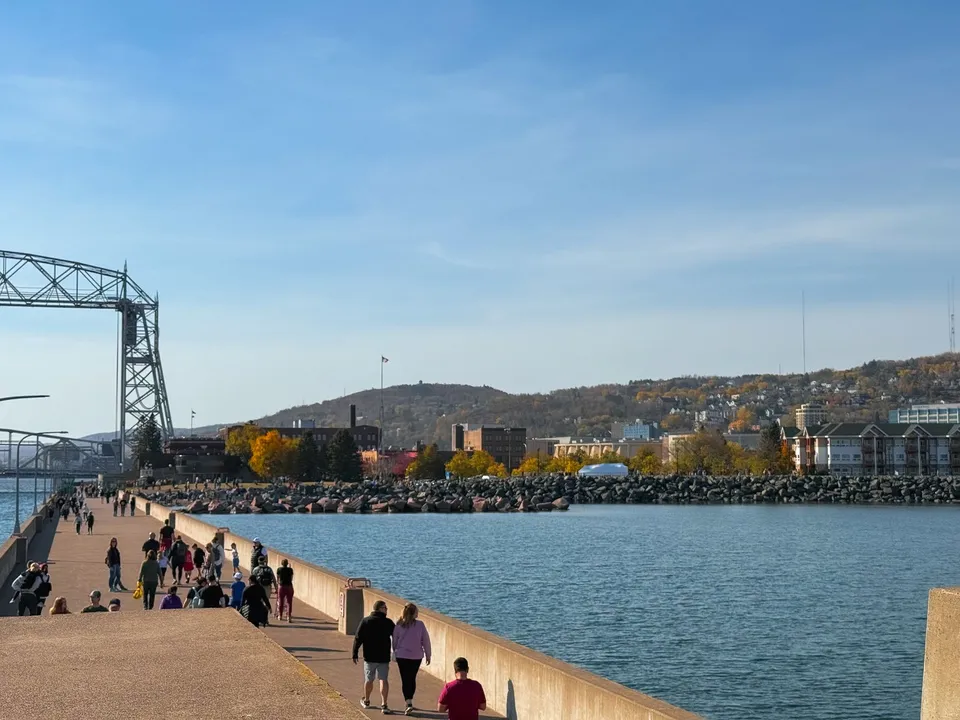
Duluth also rewards people who think about how they will reset once the shift ends. The city’s paved and gravel trail directory includes the Lakewalk, Cross-City Trail, and Waabizheshikana: The Marten Trail, along with an online parks and trails map. Those routes are useful to know because they give newcomers concrete places to investigate for a walk, a ride, or a quiet hour after work. Surface, access, and winter maintenance can vary, so it is worth checking details before you build a routine around a trail.
That may sound like a lifestyle note, but for many workers it is part of job fit. A reliable place to decompress can make a shift feel sustainable. In a city shaped by season, terrain, and distance, the question is not whether you have free time. It is whether the day leaves you a way to use it well.
A simple Duluth test for any offer
Before you say yes, try this quick check:
- Can I verify the commute for the days and direction I would actually travel?
- Does the schedule leave room for training or class if I need it?
- Is the worksite part of a local system I understand, such as port, transit, office, retail, or campus work?
- Where will I go when the shift ends and I need to reset?
If a job answers those questions cleanly, it is easier to imagine a steady life here, not just a first week.
If you are comparing Duluth-area openings, a good next step is to browse current opportunities at duluthmnjobs.com/jobs/index.html.