
In Duluth, a job can look perfect on paper and still fail the Tuesday-night test. A shift may line up with your paycheck, but if your route breaks, your class starts too late, or you never make it outside before the day ends, the whole week starts to feel crowded. That is why the most useful local question is not just, “What does the job pay?” It is, “Can this job still work once the rest of life begins?”
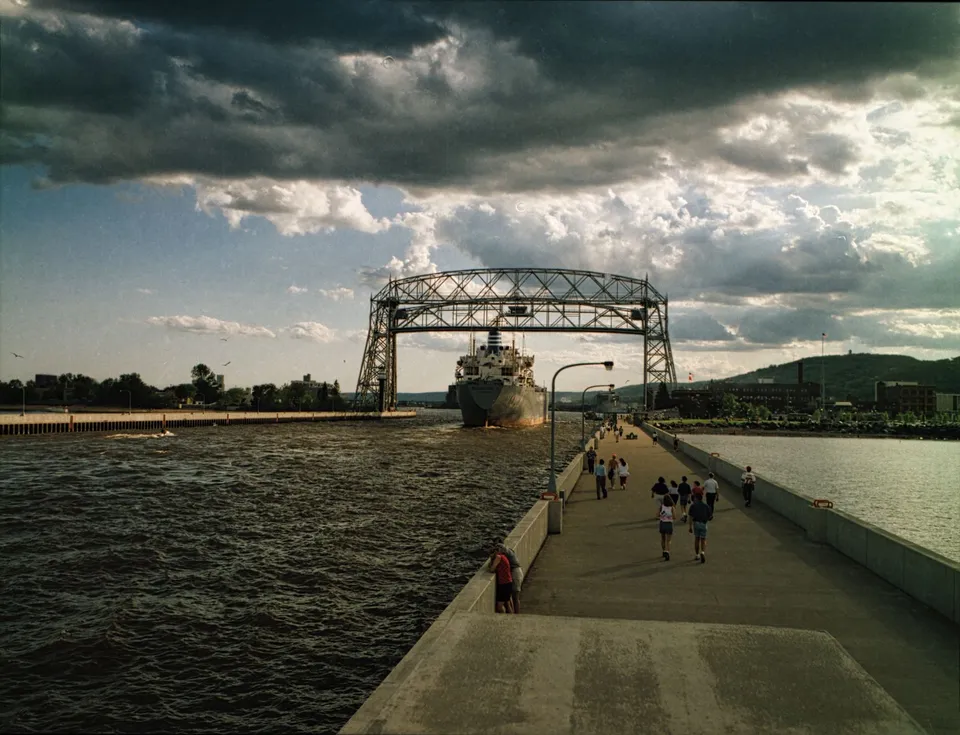
That question matters here because Duluth is not built around one simple employment pattern. The Duluth Seaway Port Authority’s business and facilities page describes bulk docks, a general cargo terminal, a shipyard, tug/barge services, and links among water, rail, and highways. In practice, that tells you the regional workday can spread across very different settings: marine operations, industrial sites, freight-adjacent businesses, office support, and service roles that do not all live in the same part of town. A candidate comparing work in Duluth, Superior, or the nearby industrial corridors should assume that the site, the schedule, and the travel pattern may matter as much as the job title.
Why the commute question is really a schedule question
Duluth Transit Authority’s routes and schedules page lets riders choose a route, day, and direction to view schedules. It also links service alerts and an emergency weather schedule. That is a small detail with a big consequence: a job offer that seems manageable at noon can feel very different when your actual start time, end time, and backup plan are all happening around bus timing.
This is especially important for anyone relocating for work and trying to avoid locking every errand into a car ride. A route that works for an early shift may not help after closing time. A schedule that works in one direction may not solve the trip home. And a service alert can change the day’s math without changing the job itself. The safest habit is to check the current schedule, not to assume the same home, worksite, or shift will remain easy to serve all week.
Training is part of the local job decision, not an afterthought
For workers who want to learn while they work, or who want to keep moving after they land, Lake Superior College’s continuing education and customized training page is part of the local landscape. It offers continuing education, customized training for businesses, and online on-demand learning.
That matters because a lot of career decisions are really timing decisions. If you are trying to step into a new field, update a credential, or sharpen a skill after hiring, the question is not simply whether the class exists. It is whether the format, prerequisites, location, dates, and cost fit the same life you are trying to build around work. For a newcomer, that can be the difference between “maybe someday” and a realistic plan. For an employer, it can affect whether a new hire stays engaged long enough to grow into the role.
The part of Duluth that people forget to map
Work and transit are only half the story. The other half is what happens after the shift ends.
Duluth’s paved and gravel trail directory includes the Lakewalk, the Cross-City Trail, and Waabizheshikana: The Marten Trail, along with an online parks and trails map. That gives newcomers more than recreation options. It gives them a way to judge whether a neighborhood still leaves room for a walk, a run, or a bike ride after work.
That matters because the after-work routine shapes how sustainable a move feels. Some people need a quick reset before heading to a second task. Some need a place to get daylight before dinner. Some need an easy way to let the day end without driving across town again. A trail map cannot tell you everything, and you should never assume identical surfaces, access, or winter maintenance from one route to the next. But it can help you picture the daily life around the job, not just the job itself.
Duluth, Hermantown, Proctor, Rice Lake, and Superior do not play the same role
This is where local geography gets real. Duluth, Hermantown, Proctor, Rice Lake, and Superior all sit inside the same regional conversation, but they do not create the same workday.
A person living closer to Duluth’s core may think first about transit, walkability, and a shorter gap between work and errands. Someone in Hermantown may evaluate a job differently because the tradeoff could involve more driving and a different mix of retail, service, and housing options. Proctor and Rice Lake may look similar on a map, but the way a household blends work, school, and after-hours recovery can still be different. Superior adds another state line, which means Minnesota and Wisconsin rules should not be treated as interchangeable.
That is why a good local search is more than “Can I reach the workplace?” It is “What does this location do to the rest of my day?”
A practical way to compare a Duluth-area offer
Before you decide a job is workable, try this local check:
- Can I explain the route to work and the route home without guessing?
- If my shift changes, does transit still support the new timing?
- If I want training later, is there a realistic way to fit it in?
- If I need a reset after work, is there a place nearby that helps me recharge?
- Does this address make sense for Duluth, Superior, or one of the surrounding communities I actually plan to live in?
Those questions are not about being picky. They are about avoiding the common mistake of treating a job offer like a standalone decision. In Duluth, the surrounding systems matter because they shape whether the job can hold up for more than the first week.
If you are comparing openings now, a good next step is to browse the current listings on duluthmnjobs.com/jobs/index.html and test each one against your route, your training plans, and the life you want after the shift ends.