
When people think about a Duluth job search, they usually start with the role, the pay, or the employer name. But in this area, a better first question is often simpler: what has to happen before and after the shift for the job to stay workable? In the Twin Ports, that answer can depend on where the work sits in the water-rail-highway network, whether transit can realistically carry your week, and whether you have a place to keep learning without blowing up your schedule.
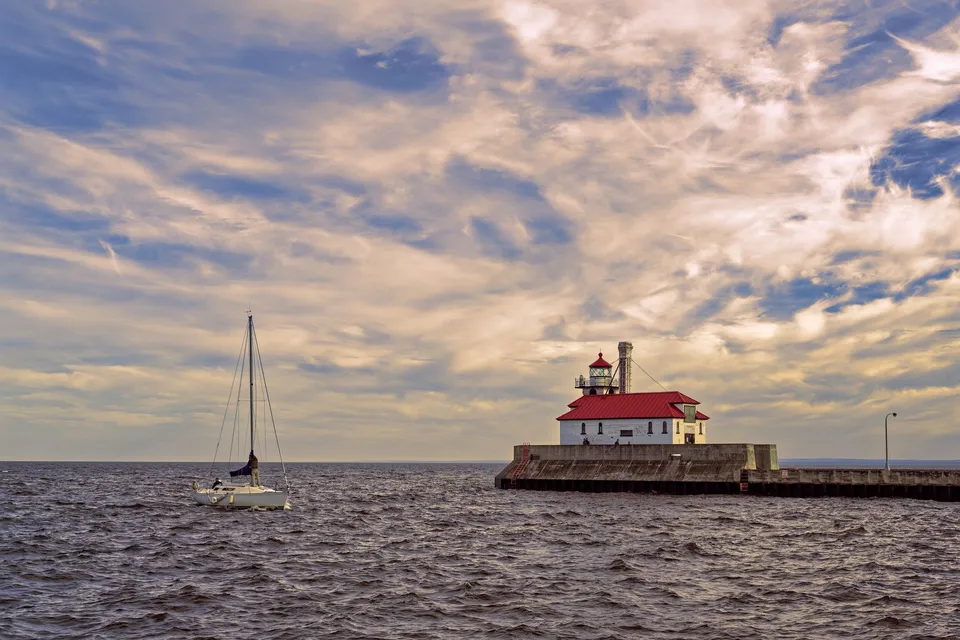
Duluth is not a single employment landscape. The Duluth Seaway Port Authority’s port operations and facilities page describes bulk docks, a general cargo terminal, a shipyard, tug and barge services, and connections among water, rail, and highways. That matters because a port-connected job is not the same as a downtown office job, a Hermantown retail position, or a Superior industrial shift. Even when the title sounds familiar, the daily rhythm may be shaped by freight timing, yard access, loading windows, or transportation handoffs. If you are comparing offers, ask not only what you would do, but where the work actually lives in that broader system.
That local geography is one reason the commute question deserves more attention than it sometimes gets. DTA publishes Duluth and Superior routes and lets riders select route, day, and direction to view schedules, and it also links service alerts and an emergency weather schedule. The practical takeaway is not that transit solves everything; it is that transit has to be checked precisely. A stop that works for one shift pattern may not work for another. A route that is fine on one day may change enough to matter on another. And if your worksite is in Superior rather than Duluth, you should treat that as a separate planning problem instead of assuming the same routine will carry over.
For applicants moving here, that distinction can change what feels possible. Someone living in Duluth, Hermantown, Proctor, or Rice Lake may find one opening manageable and another awkward simply because the route, the start time, and the direction do not line up cleanly. Someone crossing between Minnesota and Wisconsin may also need to think carefully about where the shift begins and ends. The point is not to overcomplicate the search. It is to make sure the job fits the real map you will live on, not the one in the job description.
Training is another piece that can quietly determine whether a move or a new role pays off. Lake Superior College’s continuing education and customized training page notes continuing education, customized training for businesses, and online on-demand learning. That combination matters because not every worker can disappear from the schedule for a traditional class block, and not every employer needs the same training format. If you are trying to step into a new field, add a credential, or strengthen a skill you already use, the delivery method can be as important as the subject itself. The sensible move is to verify the exact program format, prerequisites, dates, and cost before you build it into your plan.
That flexibility also changes how newcomers think about staying power. A job is easier to keep when the next step in your career does not require starting over somewhere far away. In practice, that can mean a course that fits around work, a business that wants customized training for its own team, or an online option that reduces the strain of combining learning with an irregular shift. None of that guarantees advancement, and it should not be sold that way. But it does mean the Duluth area gives job seekers more than one path from first offer to long-term growth.
The same goes for life after work. Duluth’s paved and gravel trail directory includes the Lakewalk, the Cross-City Trail, and Waabizheshikana: The Marten Trail, along with an online parks and trails map. That is not just a recreation note. It is a clue about how people in this area reset between shifts, especially when they are figuring out a new routine in a new place. A worker who wants a quick walk before dinner will use these places differently than someone looking for a bike ride or a longer weekend outing. And because the directory covers both paved and gravel routes, it is worth checking the exact surface and access points instead of assuming every trail feels the same.
For a newcomer, that matters as much as finding the right grocery store or the right bus stop. A livable job search is not just about getting to work. It is about whether the area gives you a simple way to decompress, clear your head, and make the next day easier to face. Trails do not solve housing, schedule, or pay concerns. But they do shape the quality of the hours you have left after the shift ends.
If you want a practical way to judge a Duluth offer, keep it to four questions: where is the worksite, what route or road gets me there, does the training I need fit my schedule, and where can I reset once the day is done? Those questions are local in a way that generic job advice is not. They reflect the Twin Ports as it actually works: connected but not identical, practical but not simple, and easier to understand when you look beyond the job title.
If you are planning a move for work, start with the community resources page and compare it with the exact route, schedule, and neighborhood you are considering.