
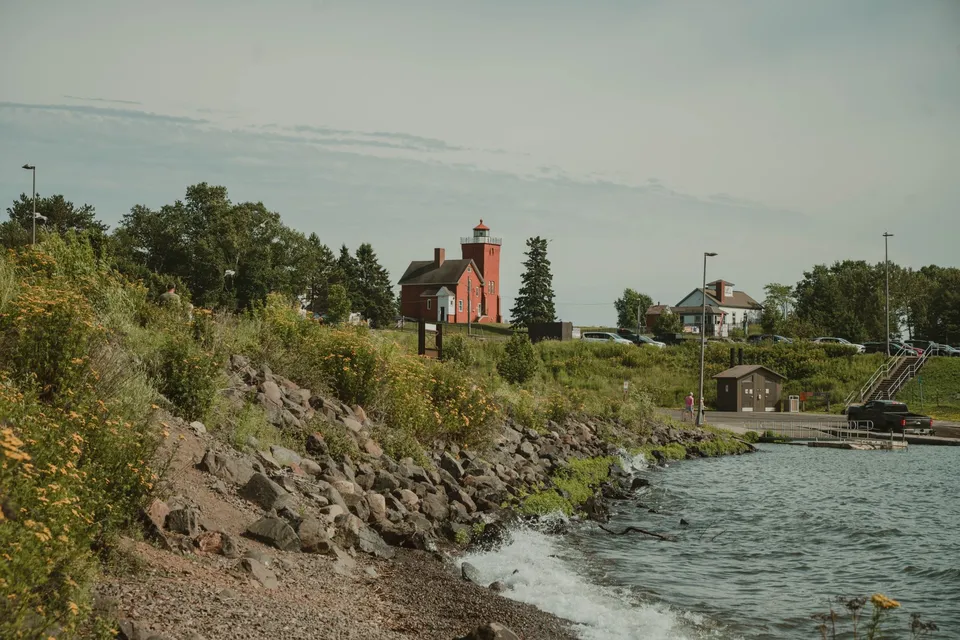
A Duluth job offer can look straightforward until you try to live inside it. The real question is not just what you will do at work, but how the work connects to the harbor, the bus, and the place you go when the shift is over. In the Twin Ports, those pieces are not abstract. The Duluth Seaway Port Authority describes bulk docks, a general cargo terminal, a shipyard, tug/barge services, and connections among water, rail, and highways, while the city’s trail directory and the DTA route system give everyday shape to where people move before and after work.
Start with the harbor, because some Duluth jobs are built around it
If your field touches freight, marine support, warehousing, maintenance, or logistics, the harbor is not scenery. It is the work system. The port authority’s port operations and facilities page shows why: this is a multimodal place with dock space, a shipyard, tug and barge activity, and movement between water, rail, and highways. That matters because a job title alone may hide a very different daily rhythm. A cargo role, a dispatch role, and a maintenance role can all live in the same harbor economy but demand different hours, equipment, and weather tolerance.
That same distinction helps newcomers avoid a common mistake: assuming every Duluth-area industrial job feels the same. Some work is tied tightly to the waterfront; some is tied to vehicles, rail, or yard space; some supports those systems from a desk. If you are moving for a job, ask not only where the employer is, but what side of the system your role actually sits on.
Check the route, not just the address
Duluth Transit Authority does not just publish a map and leave it there. It lets riders select route, day, and direction to view schedules, and it links service alerts and an emergency weather schedule. That is a useful clue for job seekers: the commute is route-specific, not citywide. Two workplaces that look close on a map can feel very different at 6 a.m., on a late shift, or during bad weather.
That is also why it helps to compare your likely worksite with the routes that actually matter to you before you accept. A bus line can make a job possible, but the exact stop, transfer, and timing still matter. If you are moving across the harbor or between Duluth, Proctor, and Superior, the commute question is not, Do buses exist? It is, Does this schedule fit my shift and my backup plan?
Keep a recovery map too
Work does not end when the shift ends. Duluth’s paved and gravel trail directory includes the Lakewalk, the Cross-City Trail, and Waabizheshikana: The Marten Trail. Those are not interchangeable paths, and they are not a promise of the same surface or maintenance in every season. But they do show that local life outside work has real places attached to it.
For someone relocating, that matters more than it sounds. A new job becomes easier to keep when you already know where you will walk, bike, or clear your head after hours. That can influence whether a neighborhood feels livable or merely affordable on paper. Duluth’s official housing profile shows a median gross rent of $1,087 and a 59.4% owner-occupied housing rate, which says something about the shape of the city’s housing stock, but not whether a specific home will work for your household.
Training is part of the map too
If your next step is skill-building, Lake Superior College says it offers continuing education, customized training for businesses, and online on-demand learning. That matters because the strongest Duluth career move is often not a dramatic leap. It is a sequence: take the job, learn the local system, then add one credential or skill that opens the next role. Just keep the specific program details current before you enroll, since format, schedule, and cost can change.
A good Duluth decision usually answers three questions at once: Can I get there, can I do the work, and can I live well enough to stay? If you can answer all three, the job is far more likely to fit the life around it.
If you are comparing a move, start with Duluth’s community resources page and the DTA route map before you narrow down neighborhoods or employers.