
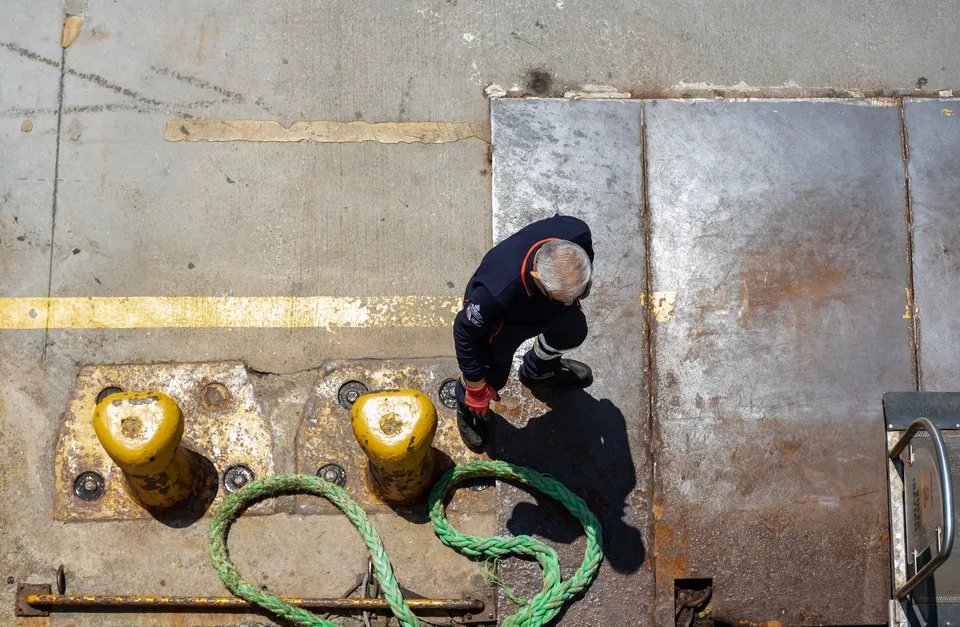
The easiest part of a Duluth move is often the job title. The harder part is figuring out whether the rest of your week can actually support that job. In the Twin Ports, that question lands in a very specific local setting: a harbor economy that moves goods by water, rail, and highway, a transit network that reaches across Duluth and Superior, and a trail system that gives newcomers a real place to reset after work. The details matter because they change how a shift feels once you are living here, not just interviewing here. The Port of Duluth-Superior describes a working waterfront built around bulk docks, a general cargo terminal, a shipyard, tug and barge services, and connections among water, rail, and highways. Port operations and facilities
Work here is bigger than a single building
That harbor geography is one reason local jobs can look different from the same job title in another city. A logistics role may touch cargo planning, trucking, rail transfers, or warehouse movement. A maintenance role may support marine equipment, docks, or industrial yards. Even if you never set foot on a dock, the surrounding work culture is shaped by the fact that the region still runs through an intermodal freight system. The practical takeaway for applicants is simple: ask where the work physically happens, not just who the employer is.
The same idea applies on the other side of the harbor. The Duluth Transit Authority does not treat the city as one block of identical service. Its route and schedule tools let riders pick a route, day, and direction, and the system publishes service alerts and an emergency weather schedule. It also lists routes that connect Duluth, Superior, Proctor, the airport side, the mall area, and campus destinations. Routes and schedules
For a newcomer, that means “close to work” is not just a mileage question. A home that looks convenient on a map may still be awkward if your shift starts before your route is running the way you need it to. Conversely, some jobs that seem far apart are more workable than they first appear because the route network ties them together. In Duluth, the commute is often a schedule problem before it is a distance problem.
Training belongs in the same conversation
One of the most useful relocation mistakes to avoid is treating education as something you solve later. Lake Superior College’s continuing education and custom training pages show that local learning is not limited to full-time college life; the school also offers continuing education, customized training for businesses, and online on-demand learning. Continuing education and custom training
That matters because many people who move for work want more than a starter job. They want a path. In practice, a flexible training option can make it easier to move from entry-level work into a better shift, a different department, or a role with more responsibility. The source does not promise a credential or a promotion, but it does show that local upskilling is part of the region’s infrastructure rather than a side project you have to build from scratch.
The best reset may be outside
The Twin Ports also gives newcomers a way to balance work with ordinary life. Duluth’s paved and gravel trail directory includes the Lakewalk, the Cross-City Trail, and Waabizheshikana: The Marten Trail, along with an online parks and trails map. Paved and gravel trails
That matters because a place becomes livable when you can picture your off-hours as clearly as your commute. A trail near home or work is not just recreation; it is often the first place people learn the rhythm of a neighborhood. Still, the city’s own trail listings are the right reminder not to overgeneralize. Surfaces, access, and winter maintenance are not identical from one trail to the next, so newcomers should check the current map instead of assuming every route functions the same way.
What this means for applicants and newcomers
If you are considering a Duluth-area job, think in three layers:
- the work site and what it touches;
- the transit or driving pattern that gets you there;
- the class, trail, or routine that keeps the rest of your week stable.
That approach fits the Twin Ports better than a simple rent-and-wage comparison. The harbor economy, route network, and training options are all part of the same decision. A job is still a job, but here it sits inside a larger local system that can either support your life or complicate it.
If you are mapping a move, start with the current DTA routes and the city trail map, then compare them with your work schedule before you decide where to land.